How We Work
How the images are made, how the greeting ends up on them, what we check — and what we do not.
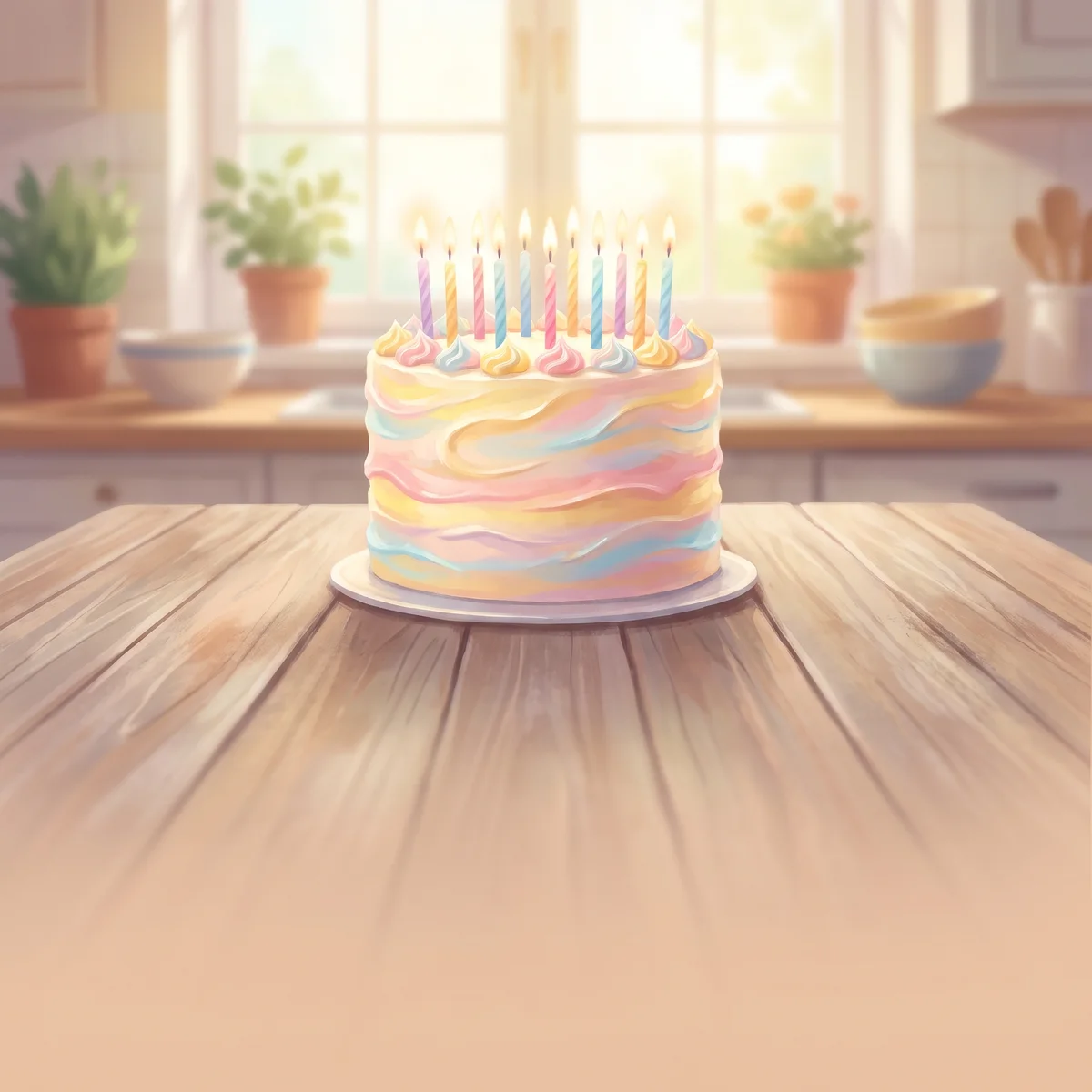
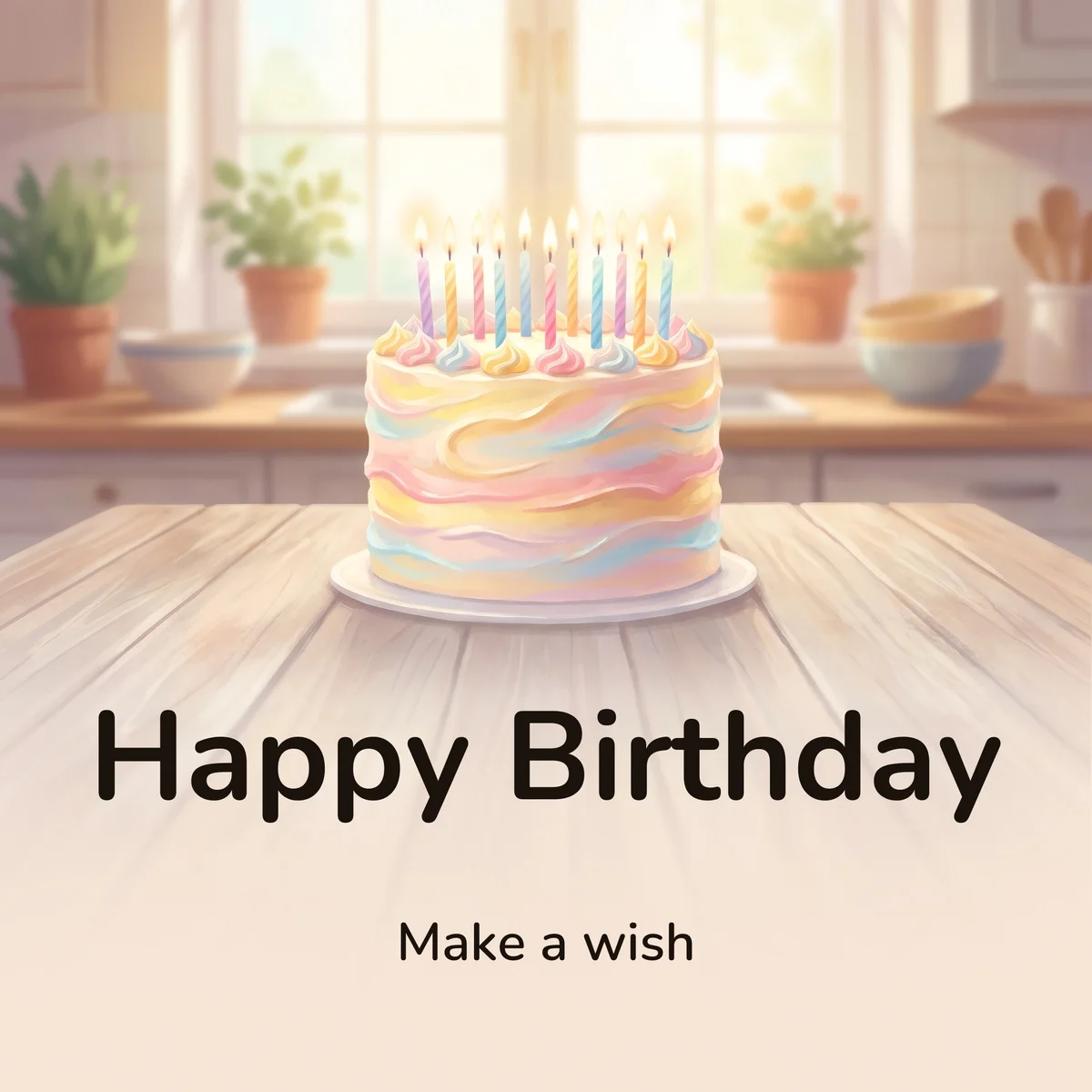
Two halves, made separately
Every image on this site is made of two parts that start out separate. The drawing — the cake, the balloons, the scene — is made with an image generator. The greeting — “Happy Birthday,” “Happy Birthday, Sister,” whatever the card says — is not drawn at all. It is text, added afterward from a text file written with an AI language model.
That separation is the central rule, not a detail of production. An image generator writes badly: it invents letters, drops others, puts accents where none belong. On a birthday card the words are the product — a card that says “Happy Birtday” is not an image with a flaw, it is an image to throw away. Asking for the drawing with no words in it and composing the words ourselves makes the text correct by construction, not by luck.
Why there is no writing inside the drawing
We explicitly ask the generator for a drawing with no text, no numbers and no lettering of any kind, and then we check it on the pixels. A drawing that carries writing gets thrown out and redrawn, even if the writing happens to be correct: if a word showed up inside the image, the finished card would carry two pieces of text — ours and the generator’s — and nobody checked the second one.
The calm zone
On all but one card, the text goes in the lower part of the image, and that part has to stay calm. So we ask the drawing to leave it open — no important detail, no busy pattern, no high-contrast edge — and then we measure whether it actually did. A drawing whose lower zone is too busy gets redrawn, not covered with a dark bar: a dark bar would fix legibility by hiding the image a reader came to see.
What we check
- That the finished card carries exactly the right words. Not by eye: a second program, one that did not compose the text, re-reads the finished image and checks letter by letter that every declared character is actually there. It has to be an independent reader, because a check run by the same program that wrote the text would agree with itself.
- That the drawing carries no writing. On the pixels, before anything is composed onto it.
- Every check is run by programs, not by a person. All 21 cards across 3 sections are checked by automated software rules; no person has looked at every card.
What these checks cannot do
They cannot tell whether a sentence is well written, whether a drawing is any good, or whether a card fits a particular occasion. They cannot even notice if a font file maps a character to the wrong shape — the two programs read the same table and would agree with each other. Some things — taste, tone, and whether a picture fits the mood — no program can judge, and no person has checked each card for them.
There is also a name-and-character check, and it is honest about what kind of check it is. Before a drawing is requested, its subject is checked against a reference list built from this site’s own search data — as of this writing, 102 blocked names, 8 cleared generic subjects, and 18 open questions with no ruling yet, including the site’s own head phrase, “happy birthday,” which is an OPEN question rather than a cleared one (a widely used descriptive phrase, and a US court case about the separate matter of the birthday SONG’s lyrics — read only as a reported outcome, never as a docket). None of it is a trademark registry search: every row records a ruling and where that ruling came from, and says so on every row. Where no ruling exists, the question stays open rather than being marked clear.
And these checks say nothing about whether an image is liked. If you notice something — a mistake in the text, a drawing that does not match the greeting — write to us at Contact. A typo report is the single most useful thing we can receive.
People, brands, characters
No image on this site shows a person. That is a deliberate rule and not a coincidence: a birthday card with a stranger on it shows someone neither the sender nor the recipient knows. In the same way, the images do not show brands, logos, or protected characters.
The drawings are not photographs and are not scans. They are made for this site, and the typeface is an openly licensed one we host ourselves — opening this page does not download anything from someone else’s server.
License and use
The images download for free, with no sign-up and no watermark. You are free to send them privately — in chats, by email, as a status image, printed for your own use.
What we ask you not to do is resell the files themselves or redistribute them as your own product — for example inside a paid collection or as merchandise in a store. You do not need to credit us; a link back to this site is appreciated, but it is not a condition.
These terms apply to every image on the site. They are also the content the license field in each image’s structured data points to.